


What Materials Can Be Recovered from Lithium Battery Recycling?

Editor: Henan Doing
Date:November 6, 2026

Lithium battery recycling can recover several valuable materials, including black mass, copper, aluminum, iron, metal casings, and plastic separator film. Further processing of black mass can extract valuable elements such as lithium, nickel, cobalt, and manganese.
The final recovered materials depend on battery chemistry, feedstock condition, and separation technology. Understanding these material streams helps recycling investors evaluate resource recovery opportunities and select suitable lithium battery recycling machine.
What Are the Main Materials Recovered from Lithium Battery Recycling?
The main materials recovered from lithium-ion battery recycling include:
1. Black Mass
Black mass is a powder mixture derived from processed positive and negative electrode materials. Depending on battery chemistry, it contains lithium-bearing compounds, nickel, cobalt, manganese, iron, phosphate, and graphite.
It is one of the most valuable intermediate products because its metal-bearing materials can be further processed for metal extraction or battery material regeneration.
2. Copper and Aluminum
Copper and aluminum come from the battery's current collectors, copper from the negative electrode and aluminum from the positive electrode. After crushing, screening, gravity separation, and air separation, the two metals are sorted by density and recovered as particles for downstream smelting and reuse.
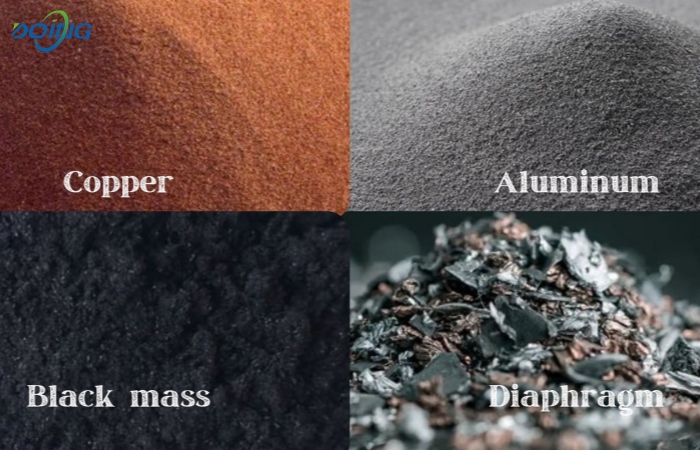 Lithium-ion battery recycling materials
3. Iron and Steel
Iron and other ferrous components can be recovered through magnetic separation. These materials mainly come from battery components and steel casings and can be collected for metal recycling.
4. Metal Casings
Lithium battery casings can be made of steel or aluminum, depending on the cell design. During recycling, air separation and magnetic separation help separate casing materials from other fractions.
Ferrous casings can be collected through magnetic separation, while non-magnetic casing materials are separated through subsequent sorting processes. These recovered metal fractions can be sent for further metal recycling.
5. Plastic Separator Film
Plastic Separator Film separates the positive and negative electrodes inside a lithium-ion battery. Common materials include polyethylene (PE) and polypropylene (PP). During recycling, screening and air separation help separate this lightweight film from metal particles and electrode materials.
Which Valuable Materials Can Be Extracted from Black Mass?
Black mass is not pure metal. It contains valuable elements that require further treatment before they can be recovered as refined products.
The main recoverable elements include:
Lithium: Can be extracted from lithium-containing compounds.
Nickel and Cobalt: Mainly recovered from corresponding cathode materials.
Manganese: Found in certain cathode chemistries, particularly NMC.
Graphite: Comes from anode materials and can be further processed for reuse.
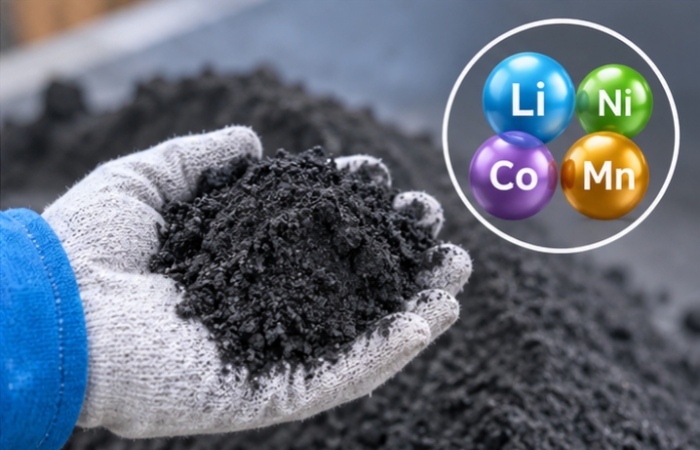 Lithium battery black mass recovery
Hydrometallurgy uses chemical solutions to extract individual metals, while pyrometallurgy uses high-temperature treatment. Both are downstream processes rather than direct outputs of mechanical crushing and separation.
How Does Battery Chemistry Affect the Recovered Materials?
Battery chemistry directly affects black mass composition and the potential value of recovered materials.
LFP Batteries (Lithium Iron Phosphate): Their cathode materials contain lithium, iron, and phosphate, while graphite is commonly used in the anode. Nickel and cobalt are not their main cathode constituents.
NMC Batteries (Nickel Manganese Cobalt): Their cathode materials contain lithium, nickel, manganese, and cobalt, making these elements important targets for downstream recovery.
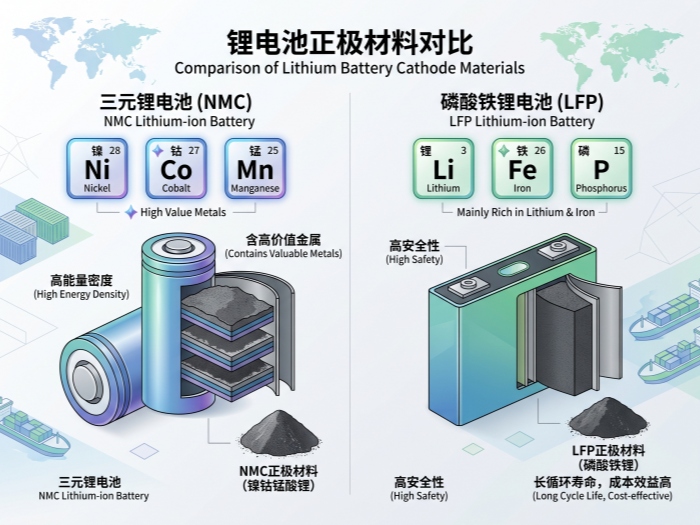 Comparison of different lithium battery components
One recycling line can be configured to process different battery chemistries, but drying and separation parameters need adjustment. Processing different chemistries in separate batches helps avoid cross-contamination and maintain black mass quality.
How Does Lithium Battery Recycling Machine Recover These Materials?
At DOING ECO (Henan DOING), we use an integrated lithium battery recycling machine line combining sealed drying, mechanical crushing, multi-stage screening, magnetic separation, and gravity and air separation. Before processing, waste batteries undergo discharging and initial shredding. The materials are then dried in a sealed system with nitrogen protection, preparing them for subsequent separation.
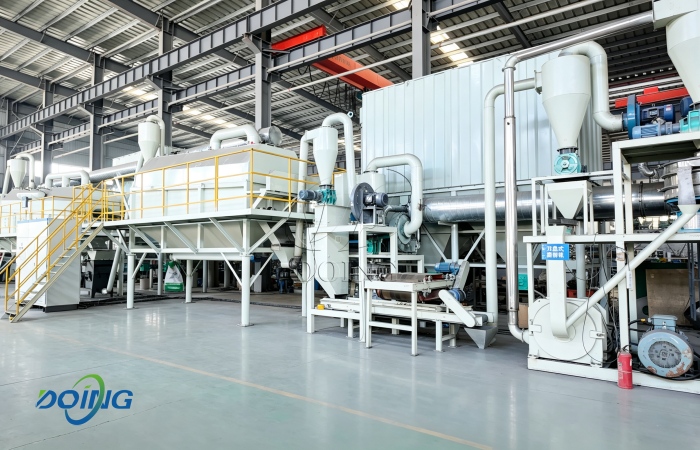 DOING ECO lithium battery recycling machine
Through multi-stage processing, our equipment separates and collects black mass, copper particles, aluminum particles, iron, magnetic and non-magnetic metal casings, and plastic separator film. Magnetic separation removes iron, a three-layer swing screen separates plastic separator film, and gravity and air separation recover copper and aluminum particles. The black mass is collected through a pneumatic conveying system. Our lithium battery recycling line has a comprehensive metal recovery rate of ≥98% and a black mass recovery rate of over 95%.
Conclusion
Lithium battery recycling recovers black mass, copper, aluminum, iron, metal casings, and plastic separator film. Further processing of black mass can extract valuable metals for reuse.
DOING ECO offers customized lithium battery recycling equipment with sealed drying, nitrogen protection, multi-stage crushing, and physical separation. Contact DOING ECO with your feedstock type, processing capacity, and recovery targets to discuss a suitable recycling solution.
FAQ
Can Lithium Battery Recycling Equipment Process Battery Electrode Scrap?
Yes. Battery positive and negative electrode sheets and production offcuts can also be used as feedstock, subject to material condition and equipment configuration.
Can One Recycling Line Handle Different Battery Shapes?
Yes. Suitable configurations can process cylindrical, pouch, and prismatic battery materials. Feeding and processing arrangements should be confirmed according to the actual battery structure.
What Information Is Needed to Select a Lithium Battery Recycling Line?
Buyers should provide battery chemistry, cell or battery format, hourly processing capacity, and expected recovered products. Feedstock samples are also useful for evaluating separation performance before equipment selection.
Leave Message
Please kindly leave your requirements in detail, or contact us via +86 15037138562. Our professional sales manager will contact you within 24 hours. Your contact information will be protected.
- QWhat machine do you want to learn about?
- Solar Panel Recycling Machine
- Lithium Battery Recycling Machine
- E-waste PCB Recycling Machine
- Copper Wire Recycling Machine
- Carbonization Pyrolysis Machine
- Radiator Recycling Machine
- Aluminum Plastic Recycling Machine
- Other:
- QWhat raw material do you want to process?
- Bamboo
- Wood
- Sawdust
- Coconut shell
- Palm Kernel Shell
- Wood Chips
- Not decided yet
- Other:
- QMachine processing capacity (tons of feedstock)
- Other:
- Not decided yet
- QWhat final product do you mainly want to obtain? For what applications?
Copyright © 2015-2026 DOING Holdings - Henan Doing Environmental Protection Technology Co., Ltd | Privacy Policy | All Rights Reserved